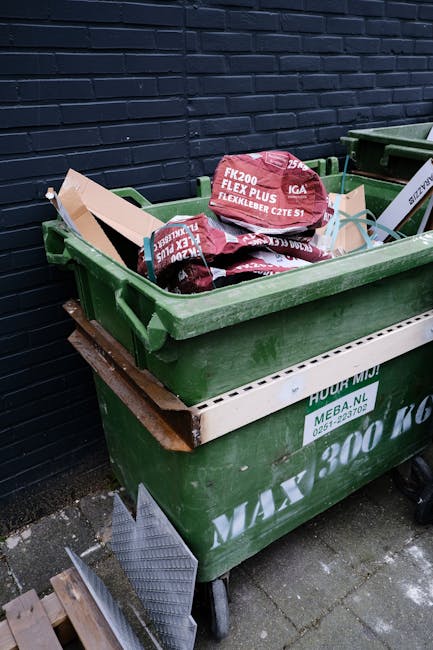
Builders' waste left on Putney sites: fast solutions
Builders' waste left on Putney sites can turn a tidy project into a messy, stressful one very quickly. One skip overfilled with rubble, a pile of plasterboard bags by the pavement, or a few lengths of timber left after the trades have gone and suddenly the job looks unfinished. If you are dealing with that kind of situation in Putney, you usually want the same thing: a fast, safe, no-nonsense solution that gets the site back under control without dragging out the hassle.
This guide breaks down what fast builders' waste removal actually involves, why it matters, how to handle it properly, and what to watch out for on live sites, refurb projects, and end-of-job clearances. Whether you are a homeowner, landlord, contractor, or site manager, the aim is simple: help you make a good decision quickly and avoid the usual traps that waste time, money, and patience. Let's face it, nobody wants to stare at a half-finished pile of debris on a wet Putney afternoon.
Table of Contents
- Why Builders' waste left on Putney sites: fast solutions Matters
- How Builders' waste left on Putney sites: fast solutions Works
- Key Benefits and Practical Advantages
- Who This Is For and When It Makes Sense
- Step-by-Step Guidance
- Expert Tips for Better Results
- Common Mistakes to Avoid
- Tools, Resources and Recommendations
- Law, Compliance, Standards, or Best Practice
- Options, Methods, or Comparison Table
- Case Study or Real-World Example
- Practical Checklist
- Conclusion
- Frequently Asked Questions
Why Builders' waste left on Putney sites: fast solutions Matters
Builders' waste is not just an eyesore. On a busy Putney street, it can block access, create trip hazards, attract complaints, and slow the next stage of the job. If rubbish is left too long, even a small pile starts to feel bigger. Bags split. Dust spreads. A skip fills faster than expected. And once neighbours start noticing, the pressure rises.
Fast solutions matter because construction sites rarely sit still. Materials arrive, trades overlap, and plans shift. A clearance delay can interfere with deliveries, make storage awkward, and even affect how safely people move around the site. That matters on domestic refurbishments as much as it does on larger commercial works.
In practical terms, prompt waste removal helps protect the schedule and the reputation of everyone involved. A contractor who leaves a clean handover is easier to trust next time. A homeowner who gets waste sorted early can actually enjoy the finished work instead of staring at leftover plasterboard and broken brick. Small detail, big difference.
If you are comparing wider waste options or trying to manage related jobs in the area, it can help to understand the local service landscape too. Some readers also look at Wandsworth clearance support when they need a broader local response, or end-of-tenancy clearance services when building works and property handovers overlap.
How Builders' waste left on Putney sites: fast solutions Works
Fast builders' waste removal usually follows a fairly straightforward pattern, though the exact setup depends on the site. The work begins with identifying what type of waste is on location, how much there is, and whether it needs sorting. That sounds simple, but on an active site it can be messy. There may be mixed rubble, timber offcuts, tiles, packaging, old fixtures, metal, and general refurbishment debris all in one place.
From there, a clearance team typically plans the safest and quickest way to remove the material. That might mean loading directly from a front garden, basement, driveway, rear access path, or roadside spot. In Putney, access is often the real challenge. Narrow entrances, parked cars, shared passageways, and tight schedules can make a straightforward lift-and-clear job more complicated than it first appears.
Good waste handling is rarely just "take it away." It normally includes:
- checking access and lifting points
- identifying reusable, recyclable, and mixed waste
- using suitable bags, tubs, or containers
- loading safely without damaging finishes
- transferring waste to an authorised facility or approved disposal route
That last point matters. A tidy finish is one thing. Proper disposal is another. In the UK, reputable waste removal should follow legal and environmental expectations, and you should expect clear handling rather than vague promises. If a provider sounds too casual about where the waste goes, that is a warning sign. Truth be told, it is worth asking the question directly.
For projects that need more than a one-off collection, many people combine building waste clearance with broader house clearance planning. If that is your situation, you may find the site resources on house clearance in London useful when the waste problem sits alongside furniture, junk, or loft contents.
Key Benefits and Practical Advantages
The obvious benefit is speed. But that is only the start. A proper clearance saves time in places people often forget to count: the time your builder spends shifting rubble by hand, the time a landlord spends dealing with complaints, the time a homeowner spends trying to make a dozen small decisions when they are already tired of the project.
Here are the main practical advantages of dealing with builders' waste quickly and correctly:
- Safer access: walkways, entrances, and work zones are easier to use.
- Cleaner presentation: the property looks cared for, even mid-project.
- Better workflow: trades can move around the site without dodging piles of debris.
- Less stress: one less loose end when you are already juggling a lot.
- Fewer neighbour issues: less noise, clutter, dust, and frustration outside the property.
- More accurate finishing: final cleans, snagging, and inspections are easier when waste is gone.
There is also a money angle, though not always in the obvious way. Leaving debris around can create delays, extra labour, and avoidable rework. For example, if a tradesperson has to move waste twice or work around an obstructed space, that is time being paid for without moving the job forward. Not ideal.
Expert summary: fast builders' waste removal is not just about getting rid of rubbish. It is about restoring control to a site, protecting the schedule, and reducing the small friction points that quietly add cost and stress.
Who This Is For and When It Makes Sense
This kind of service is useful in a lot of real-world situations. You do not need a giant construction site to need it. In fact, some of the most common calls come from ordinary residential jobs where waste has simply built up faster than expected.
You may need fast builders' waste removal if you are:
- a homeowner after a bathroom, kitchen, loft, or extension project
- a landlord preparing a property after works or repairs
- a contractor needing a clean handover before the next trade arrives
- a property manager handling a refurbishment in stages
- a developer trying to keep common areas and access routes clear
- an office or shop owner dealing with fit-out debris
It makes sense especially when the waste is:
- blocking access or storage space
- mixed and awkward to separate
- too bulky for normal household disposal
- left behind after the skip is full
- causing complaints, safety concerns, or project delay
Sometimes the trigger is not dramatic. A site just starts to feel wrong. Dusty. Cluttered. A little out of control. You know the feeling when one bag becomes three, and then the corner of the room disappears under old tiles and packaging? That is usually the point to act.
If your project involves moving out, turning over a property, or clearing the last remnants of a build before new occupants come in, related services such as garage clearance and loft clearance can sometimes solve the wider clutter problem in one go.
Step-by-Step Guidance
If you want a fast, sensible outcome, the best approach is structured rather than rushed. A bit of planning at the front end saves headaches later, even if the actual removal is rapid.
1. Separate what is urgent from what is simply inconvenient
Start by deciding whether the waste is causing a safety problem, a space problem, or just visual clutter. If access is blocked or debris is unstable, treat it as urgent. If it is simply sitting in one corner, you still want it gone soon, but the planning can be calmer.
2. Identify the waste type
Builders' waste is often mixed. Common categories include rubble, plasterboard, timber, metal, plastics, tiles, sanitary ware, packaging, and old fixtures. Some materials need more care than others. For instance, anything suspect, sharp, dusty, or heavy may require particular handling. A good team will notice this early rather than trying to work it out halfway through the lift.
3. Check access and loading points
Putney properties can be straightforward or awkward depending on the street, parking, and rear access. Measure the practical route, not just the front door. Can a team carry waste through without damaging flooring? Is there room for a vehicle? Can lifting happen without disturbing neighbours? These small details save a lot of backtracking.
4. Decide whether you need one-off clearance or staged removal
If the waste is the result of a single phase, a one-off collection may be enough. If work is ongoing, staged clearances often make more sense. That way the site stays workable instead of becoming a storage area for offcuts, bagged debris, and half-used materials.
5. Book a clear collection window
The best fast solutions are specific. Good scheduling means fewer missed slots and less chance of waste lingering for another day. Ideally, the plan should be easy to communicate to the trades on site, especially if more than one contractor is involved.
6. Ask about disposal and sorting
You do not need a lecture, but you do need clarity. Ask how the waste is handled and whether materials are separated where possible. Responsible sorting is generally better practice, and it shows the provider takes the job seriously.
7. Final sweep and handover
Once the waste is removed, do a quick check for nails, screws, dust, splinters, and leftover fragments. That final sweep is underrated. It is the difference between "cleared" and "properly finished."
Expert Tips for Better Results
There are a few things that make a clearance run more smoothly, and most of them are simple. Not glamorous, but effective.
- Bundle by material where possible: wood, metal, rubble, and general rubbish are easier to manage when they are not all mixed into one impossible heap.
- Keep an eye on dust: plaster and fine debris travel. If the pile is dry, a little care before moving it can reduce mess across the site.
- Think about sequence: remove waste before delicate finishes are installed, not after.
- Protect walkways: one sheet of floor protection can prevent a frustrating repair later.
- Use realistic timing: if a room is full of broken materials, expect access to take longer than you think.
One practical trick that helps in many Putney homes is to clear from the inside out. Move waste to a safe staging point near the exit first, then load it in one controlled run. It sounds boring, I know. But it works.
Another thing: if the waste has been sitting around through a damp spell, the smell and weight can be worse than expected. Wet plasterboard or soggy cardboard turns a neat stack into a bit of a nightmare. Better to deal with it sooner rather than later.
For broader support with general removal jobs, some readers also look at full house clearance options when builders' debris is only one part of a much bigger cleanup.
Common Mistakes to Avoid
People usually do not get builders' waste wrong because they are careless. More often, they are busy and trying to finish the job. Still, a few common mistakes cause most of the trouble.
- Leaving waste until the end: this is how small piles become major obstructions.
- Assuming everything can be thrown together: mixed waste is often harder and more expensive to deal with properly.
- Blocking access routes: if the team cannot move safely, everything slows down.
- Ignoring neighbour impact: a noisy, dusty, or cluttered pavement can lead to complaints fast.
- Not checking disposal arrangements: if nobody is clear where waste is going, the job is unfinished in a very real sense.
- Forgetting hidden debris: underfloor fragments, fixings, and sharp offcuts are easy to miss and annoying to step on later.
A smaller but surprisingly common mistake? Trying to do everything in one exhausted evening. Sometimes that works. Often it does not. By the time people are on their third trip with bags of rubble, concentration goes and the cleanup gets sloppy. Better to plan the right sort of fast, rather than the chaotic sort.
Tools, Resources and Recommendations
You do not need a lot of fancy equipment to manage builders' waste well, but a few basics make the process easier and safer.
Useful tools and materials
- heavy-duty rubble sacks or builder bags
- gloves with good grip
- dust sheets or floor protection
- trolley or sack barrow for heavier items
- labels or simple markers for sorting
- brooms, dustpans, and a small vacuum for final cleanup
What to look for in a service
- clear communication about what can be collected
- realistic time slots, especially for busy roads
- experience with mixed construction waste
- careful handling around finished surfaces
- straightforward pricing and no confusing add-ons
If you are coordinating several property-related clearances, it can be worth reviewing broader service pages too. For example, office clearance support may be relevant for fit-outs, while recycling-focused services are useful when you want a cleaner separation of reusable materials.
The best recommendation is simple: choose the method that matches the waste, the access, and the deadline. That sounds obvious, but it is exactly where many people go wrong. A quick job is not always the same as the cheapest job, and the cheapest job is not always the one that ends fastest. Slightly annoying, yes. True, also yes.
Law, Compliance, Standards, or Best Practice
When builders' waste is being removed, the exact legal position will depend on who produced the waste, how it is stored, and who is handling it. In the UK, waste must be managed responsibly, and it should go through proper channels rather than being tipped wherever it is easiest. For site owners and contractors, that means being careful about who you appoint and making sure the waste is handled by a legitimate route.
Best practice usually includes the following:
- using a responsible waste carrier or clearance provider
- keeping waste separated where practical
- avoiding fly-tipping risks
- maintaining tidy, safe site access
- ensuring hazardous or specialist materials are treated appropriately
Plasterboard, for example, can require more care than general rubble. Electrical items, paints, and some construction residues may need separate treatment too. You do not need to become a waste expert overnight, but you do need to know enough to ask the right questions. That alone cuts risk.
On shared streets and tight residential roads in Putney, local nuisance and access issues matter as much as the waste itself. Keep pathways clear, avoid overstaying parking arrangements where applicable, and make sure the removal plan fits the street, not just the site. That practical approach usually prevents the sort of avoidable problems that make everyone tired.
Options, Methods, or Comparison Table
There are a few common ways to deal with builders' waste, and the right one depends on how much material you have, how quickly it needs to go, and how easy the site is to access.
| Method | Best for | Strengths | Limitations |
|---|---|---|---|
| Skip hire | Larger projects with enough space | Useful for ongoing work, simple loading | Needs space, permits may be relevant, can sit too long |
| Man and van clearance | Fast removal and awkward access | Flexible, quick, less site disruption | May not suit very large volumes |
| Bagged collection | Smaller to medium jobs | Good for phased cleanup, tidy storage | Manual handling can be heavy and slow |
| Staged site clearance | Longer projects or refurb work | Keeps the site usable throughout the job | Requires planning and coordination |
For many Putney properties, man-and-van style clearance is often the most practical for speed, especially where access is tight or parking is limited. A skip can still be the better answer on larger builds, but if the waste is already sitting on site and you need it gone quickly, waiting for the perfect skip setup can drag the whole thing out. Sometimes the simplest route is the one that actually gets finished.
Case Study or Real-World Example
Here is a typical local-style scenario. A small terraced property near Putney gets a kitchen refit. By the time the units come out, there is old chipboard, a broken sink, plaster dust, packaging, and a few awkward lengths of timber stacked in the hallway. The trades are due back the next morning, but the hallway is effectively unusable. It smells faintly of wet dust and adhesive, and every footstep seems to crunch.
Instead of waiting until the end of the week, the owners arrange a fast clearance the same day. The key steps are simple: protect the floor, separate sharp and heavy waste, move bags to the front with care, and remove the load in one go. The hallway is cleared, the kitchen area is ready for the next visit, and the builders can get on without working around a pile of rubble. No drama. No extra back-and-forth. Just a clean reset.
That kind of result matters because most build projects are not ruined by one big failure. They are slowed by ten small ones. Waste is one of the easiest to fix quickly, which is exactly why people should not leave it hanging around.
Practical Checklist
Use this quick checklist before arranging removal of builders' waste from a Putney site:
- Confirm what waste is on site and whether it is mixed
- Check whether any items need special handling
- Identify the easiest safe access route
- Protect floors, walls, and finished surfaces
- Decide whether one-off or staged clearance is better
- Make sure the timing fits the build schedule
- Ask how the waste will be sorted and disposed of
- Clear smaller hazards like loose screws, shards, and offcuts
- Plan for a final sweep after removal
- Keep neighbours, access, and parking in mind
Quick takeaway: if the waste is starting to block access, slow the job, or spoil the finish, deal with it now. Fast action almost always costs less in stress than putting it off another day.
Conclusion
Builders' waste left on Putney sites is one of those problems that looks minor at first and then gets in the way of everything. The good news is that it usually has a straightforward fix if you act early, keep the site safe, and choose the right removal method for the job. Whether you are dealing with a small domestic refurb or a more involved property project, the right clearance approach gives you space, order, and a much better finish.
Do not wait for the pile to become the project. A quick, well-planned response can make the whole site feel lighter and easier to manage. And honestly, that bit of breathing room is often what people need most by the end of a build.
Get a free quote today and see how much you can save.
When the dust settles and the last bag is gone, the place starts to feel like yours again. That is usually the moment everything finally clicks into place.
Frequently Asked Questions
What counts as builders' waste on a Putney site?
Builders' waste usually includes rubble, bricks, tiles, plasterboard, timber, packaging, old fixtures, metal offcuts, and general refurbishment debris. In practice, it is anything left over from building, decorating, demolition, or renovation work.
How fast can builders' waste be removed?
That depends on access, volume, and site conditions. Small to medium clearances can often be arranged quickly if the waste is ready and the route is clear. The more awkward the site, the more planning you may need, but speed is usually possible when the job is well organised.
Is it better to use a skip or a clearance team?
It depends on the project. A skip can suit longer works where there is room to place it and time to fill it. A clearance team is often better when access is tight, the waste needs to go fast, or you want a one-off removal without leaving a container on the street.
What if the waste is mixed with household rubbish?
Mixed waste can still be cleared, but it may need sorting. Builders' debris mixed with general rubbish is common after refurbishments. A sensible provider will assess it and work out the best handling route rather than treating it all as the same material.
Do I need to sort the waste before collection?
Not always, but basic sorting helps. Separating rubble, timber, metal, and general rubbish can make the process smoother and sometimes quicker. If you cannot sort it yourself, a clearance team may be able to do it on site.
What should I do if the waste is blocking access?
Treat that as urgent. Blocked access can slow trades, cause safety issues, and make the site harder to work on. The first step is to clear a safe route and arrange prompt removal so the job can continue properly.
Are there special rules for plasterboard or hazardous materials?
Some materials do need extra care. Plasterboard, paints, sharp metal, and suspicious debris should be handled cautiously. If you are unsure, ask before moving anything. It is better to pause for a minute than to create a bigger problem later.
How can I keep neighbours happy during waste removal?
Keep the access route tidy, avoid dragging materials across pavements, stick to the agreed time window, and minimise noise where possible. A brief, organised collection is usually far less disruptive than waste left out for days.
What is the biggest mistake people make with builders' waste?
Leaving it too late. Waste tends to grow in size and inconvenience when it is ignored. One pile becomes three, access gets worse, and the site starts to feel chaotic. A fast response nearly always saves trouble.
Can builders' waste be removed from tight or awkward Putney properties?
Yes, usually. Tight access is common in London properties, so experienced clearance planning matters. Rear lanes, narrow hallways, stairs, and parked streets all require a bit of thought, but they are rarely a deal-breaker.
Will the waste definitely be disposed of properly?
It should be, if you use a responsible provider. It is fair to ask how the waste will be handled and where it goes. Proper disposal is part of the service, not an optional extra.
What should I prepare before booking fast removal?
Have a rough idea of the waste type, quantity, access route, and preferred timing. A few clear photos also help in many cases. The better the information upfront, the smoother the clearance is likely to be.